






Arcane Archives · The Samhain edition
At the turning
of the season.
A guide to Samhain, the stories that surround it, and the small rituals that make room for memory, reflection and the coming winter.
Discover the meaning of Samhain ↓Samhain traditions offer a thoughtful way to approach the end of October: learning the stories behind the season, remembering those who came before us, and noticing what changes as the year grows darker.
For the witchy, the pagan and the simply curious, this guide brings together historical context and practical ideas for a personal observance. You will find an introduction to Samhain, its relationship with Halloween, and a choice of quiet rituals you can make your own.
01 / The threshold of winter
What is Samhain?
Samhain is a Gaelic seasonal festival associated with the beginning of winter. In the traditional Irish calendar, it falls on 1 November, with much of the celebration taking place the previous evening, 31 October. The National Museum of Ireland records seasonal feasting, games, disguise and beliefs about returning spirits among the customs connected with this time.[1]
Today, some pagans observe Samhain through ancestor remembrance, reflection and seasonal ritual. In modern Druidry, for example, the Order of Bards, Ovates & Druids identifies it as a festival for honouring ancestors.[4] The ideas below are contemporary suggestions for personal practice, informed by the season rather than presented as a reconstruction of one ancient ceremony.
Begin with the place you are in. Notice the light, weather, plants and rhythms around you. A meaningful observance can be as small as a walk, a handwritten memory or a meal shared with someone you love.
02 / Folklore, faith and the passing of time
Is Samhain the same as Halloween?
The two are connected, but the names carry different histories. Samhain belongs to the Gaelic seasonal calendar. Halloween takes its name from All Hallows’ Eve, the evening before the Christian feast of All Saints. Familiar Halloween celebrations reflect overlapping seasonal customs, Christian observances and later changes.[2]
Samhain
A seasonal festival with Gaelic roots, also observed in varied ways by contemporary pagan communities.
Halloween
A holiday shaped by multiple influences, now celebrated through everything from local traditions to costumes, gatherings and playful scares.
In Irish folklore collected by the National Museum, Halloween could be a night of family games and festive food, as well as a time when the dead were believed to return home. Those records show how celebration, uncertainty and remembrance could sit together. They do not mean that every modern ritual dates unchanged to antiquity.[1]
One wonderfully tangible example is the lantern. The museum preserves a replica of a frightening carved turnip lantern from County Donegal, recording an Irish custom that predates the familiar pumpkin lantern associated with Halloween in America.[3]
What about “the veil”? Some contemporary practitioners describe Samhain as a time when the veil between the living and the dead is thin. That is a spiritual belief or metaphor, depending on the practitioner. A modern reflection published by the Order of Bards, Ovates & Druids uses this language alongside remembrance and rest.[5]
03 / Choose what speaks to you
How would you like to mark the season?
Open a path to find a starting point. You can combine them, or choose just one.
04 / Five ways to observe Samhain
Small rituals, chosen with intention.
These are modern practices you can adapt to your own beliefs. There is no shopping list to complete and no requirement to do them all.
Make space for remembrance.
Set out a photograph, a letter or an object connected with someone you want to remember. Say their name, tell a story, or write down something they taught you. If you are gathering with others, invite each person to share a memory without putting anyone under pressure to speak.
Remembrance can include chosen family, friends, teachers and beloved animals. If family history feels difficult, choose a source of care or inspiration that feels right for you.
A question to sit withWhat is one thing I would like to carry forward from this person’s life?
Write at the edge of a season.
A seasonal journal is a place to notice what has changed. Describe the last few months honestly: the things that grew, the plans that shifted, and the parts of your life that need more attention. Finish by choosing one small action for the coming week.
You can use any notebook. If you enjoy making a dedicated ritual of writing, the Sun & Moon Refillable Celestial Journal gives your seasonal entries a place to return to. A feather quill can make a letter or dedication feel more deliberate; its ink is separate.
A question to sit withWhat am I ready to finish, and what deserves my care next?
Take a walk with no collecting list.
Notice the shapes of branches, the quality of the air, the sounds around you and the time dusk arrives. Return to a familiar place and look for details that have changed since your last visit. A photograph or a few written lines can become your record of the season.
Leave plants and wildlife undisturbed. If you bring home a fallen leaf from somewhere collecting is permitted, let that one object be enough. Your surroundings do not need to resemble an autumn postcard for the practice to matter.
A question to sit withWhat is changing here, and what am I only noticing because I slowed down?
Gather around a seasonal meal.
Choose food that makes sense for your household: soup, bread, apples, a favourite family recipe or whatever is available to you. Set the table with care, put your phone away for a while and share something you appreciated about the past season.
For a remembrance meal, cook a dish associated with someone you miss or tell the story behind a recipe. If you are spending the evening alone, a thoughtfully prepared plate and a handwritten memory can still make it feel like an occasion.
A question to sit withWhat has sustained me this year, and how can I acknowledge it?
Try a three-card reflection.
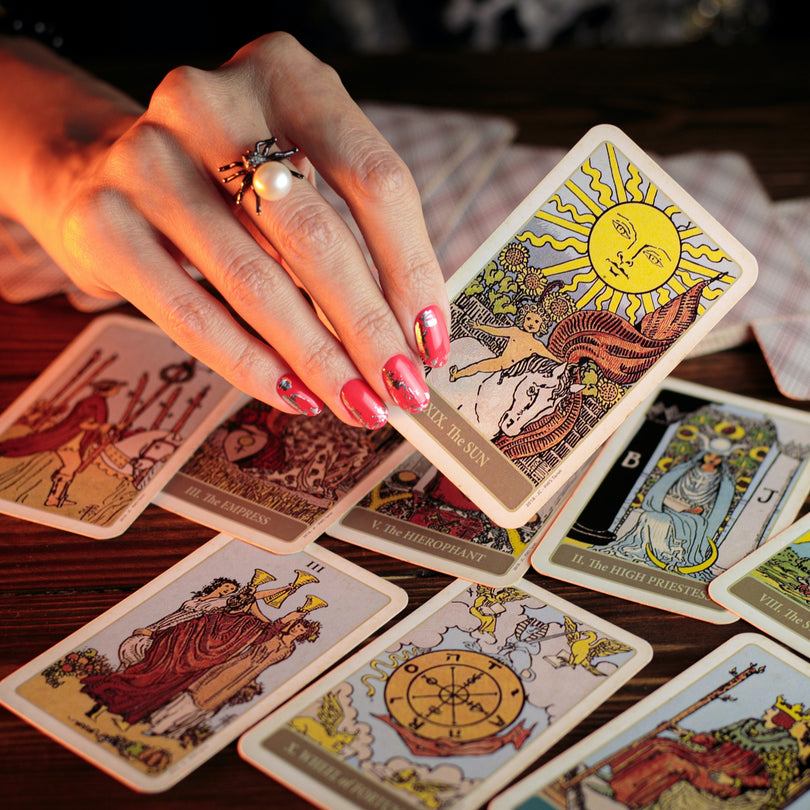
If cards are part of your practice, use three positions: what I am leaving, what I am learning, and what I am tending. Write your first response to each image before reaching for a guidebook. You can also answer the three prompts directly in a notebook.
This is a contemporary reflective exercise, not a claim that tarot was part of ancient Samhain observance. Browse the tarot card collection if you are choosing a deck, or keep your reading visible on the Wooden Moon Phase Tarot Card Stand. The stand is sold separately from the cards.
A question to sit withWhat useful action does this reflection suggest for tomorrow?
05 / A simple Samhain ritual
Twenty quiet minutes
at the turning of the season.
Set aside about twenty minutes for this original reflection practice. Bring a notebook, a meaningful object and a gentle light. A lamp or battery candle works beautifully.
-
Arrive.
Clear a small surface, settle into your seat and take a few unhurried breaths. Notice where you are and how the evening feels.
-
Remember.
Look at your chosen object. Write a name, a memory or a lesson you want to keep. You can speak it aloud or let it stay private.
-
Recognise an ending.
Write one sentence beginning “This season, I am ready to finish…” Fold the paper into your journal. Nothing needs to be burned.
-
Choose what to tend.
Write one practical promise for the next week. Keep it small enough to do: call someone, make room for rest or return to a project you care about.
-
Close the evening.
Read your words once more, put the object away or leave it on your shelf, and switch off your light when you are ready. Let the practice end clearly.
If you choose a real candle, use a suitable holder on a stable, heat-resistant surface, keep it away from paper and fabrics, and extinguish it before leaving.
06 / A place to return to
How to create a simple Samhain altar or seasonal corner.
A small shelf or clear corner of a table can give your observance a physical home. Use objects whose meaning you understand, and leave enough space to read, write or sit comfortably. The arrangement can be temporary.
Something remembered.
A photograph, a letter, a keepsake or a written name. Choose something you are comfortable seeing and sharing.
Something seasonal.
An apple, a small pumpkin, a photograph of a tree or another detail that connects with your local season.
Something illuminating.
A gentle lamp or battery candle. Warm light can make the corner feel inviting without adding smoke or an open flame.
Somewhere to reflect.
A notebook, a pen and a clear patch of table. Optional cards, symbolic objects or jewellery can be added when they have personal meaning.
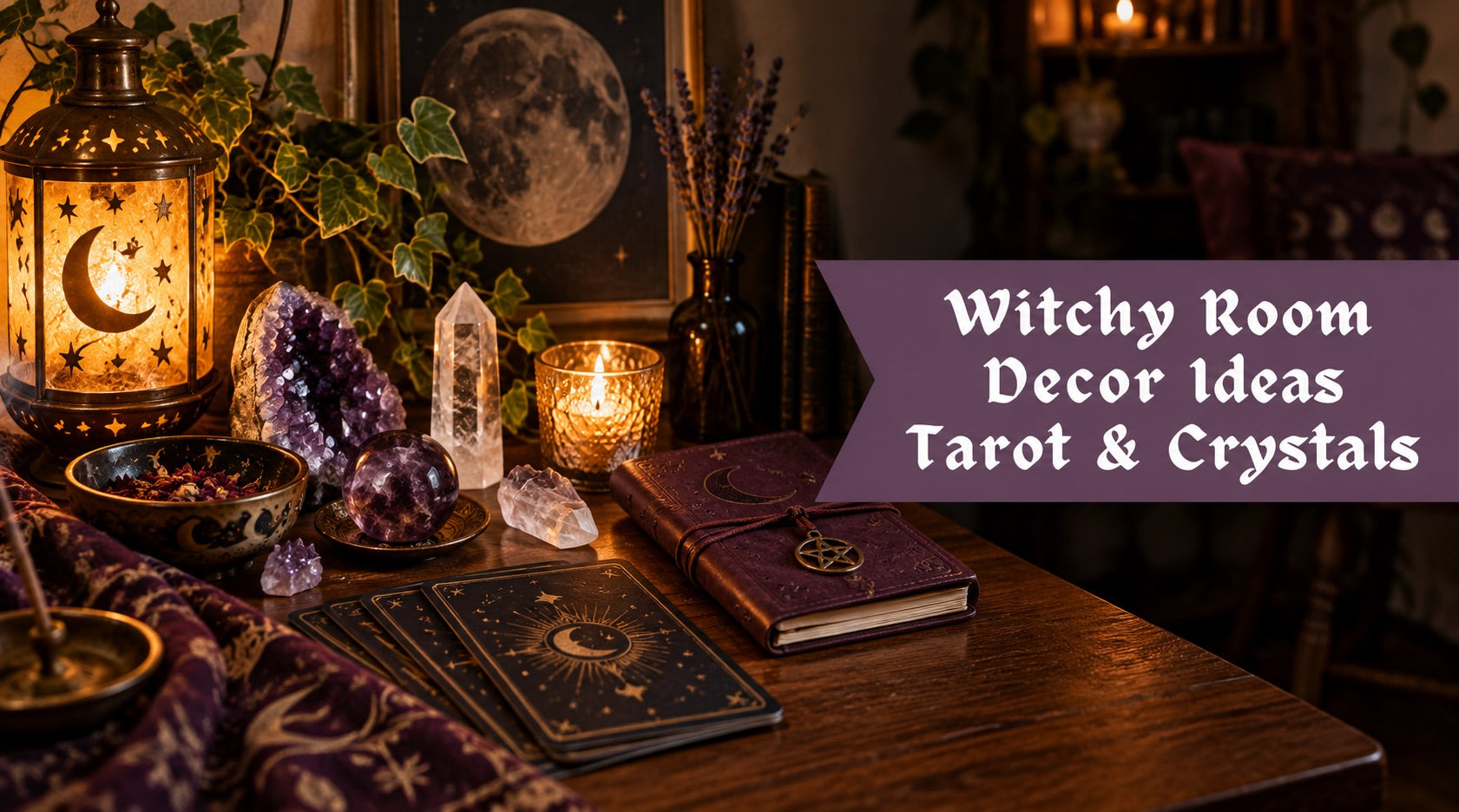
For a more decorative arrangement, begin with the House & Home collection, then choose one focal piece rather than filling every space. Wall art and décor can frame the area; lighting and soft layers help make it a place you want to spend time.
Crystals, moon motifs and special tools are optional elements of a modern personal space. You do not need them to observe Samhain. If you wear crystal jewellery as a personal reminder, choose it for the meaning you give it.
The Arcane Trail edit
Objects for a quieter season.
A small selection for journaling, contemplation and atmosphere. These are optional contemporary pieces for your space.
 A place for your wordsSun & Moon Refillable Celestial JournalA refillable celestial journal for memories, observations and the season ahead.Explore this piece ↗
  For a handwritten ritualFeather Quill Dip Pen Gift SetA feather dip pen for letters and dedications. Ink is sold separately.Explore this piece ↗
  Keep a reflection in viewWooden Moon Phase Tarot Card Stand & Crystal TrayA wooden stand for cards and small keepsakes. Cards and crystals are separate.Explore this piece ↗
  A little evening glowIlluminated Iridescent Potion Altar BottleChoose a With Light option if you want the illuminated base included.Explore this piece ↗
  A lunar backdropFive-Piece Moon Phase Wooden Wall ArtFive separate wooden moon shapes with open scrollwork.Explore this piece ↗
  Settle into the seasonMoon Phase Sherpa ThrowA moon-phase sherpa throw for your reading chair or quiet corner.Explore this piece ↗
07 / Your evening, thoughtfully prepared
A simple Samhain checklist.
Tick what fits your plans. Leave the rest.
08 / Questions at the threshold
Samhain questions & answers.
When is Samhain celebrated?
How do you pronounce Samhain?
Pronunciation varies by language and dialect, so a written English approximation only goes so far. You can listen to Irish recordings from Munster, Connacht and Ulster in Teanglann’s pronunciation database.
Do I have to be a witch or pagan to learn about Samhain?
You can learn about the festival’s history and take a thoughtful interest in the season without adopting a religious identity. If you attend an organised observance, follow the hosts’ guidance. For a personal evening, choose practices that fit your own beliefs.
Do I need an altar, crystals or special tools?
No. A remembered story, a walk or a notebook can be enough. Use objects you already own before deciding whether you would enjoy adding anything new.
Is a tarot reading an ancient Samhain tradition?
The three-card exercise in this guide is a modern suggestion. It should not be presented as a surviving ancient Samhain rite. If cards are not part of your practice, use the same prompts for journaling.
Can I observe Samhain and enjoy Halloween too?
Yes, if that fits your beliefs. You might enjoy costumes or an evening with friends, then set aside another quiet moment for remembrance or reflection. The activities do not need to happen all at once.
Continue along the trail
A space and a style of your own.
Sources & further reading
Historical notes draw on museum and library resources. Contemporary Druid perspectives are identified separately; the practical exercises in this guide are original modern suggestions.